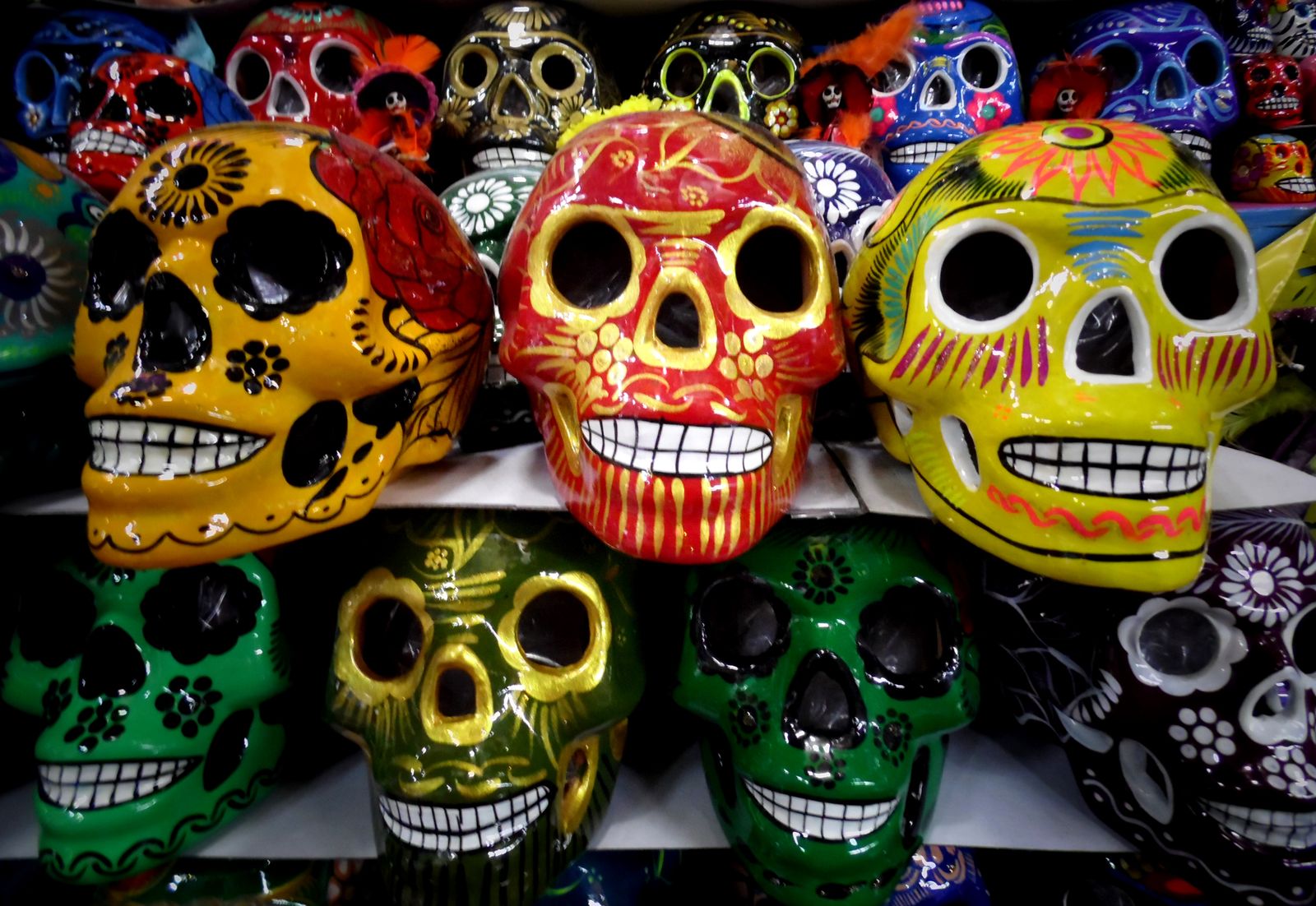
The dead come back once a year, for a couple of nights, and they still have a better social life than you. Someone cooks their favorite dish. Someone pours their favorite drink. A whole family stays up for them until sunrise. You've spent three weekends in a row canceling dinner with friends.
The 2026 calendar is on their side: November 2nd falls on a Monday, which means a long weekend for them and for any living person who wants to tag along. Mexico City even ran a dress rehearsal in June, a Día de los Muertos-themed parade to welcome the World Cup. Because if there's one thing this country knows how to do, it's invite death to every party.
Here are the places where death has the best week of the year, from the most intimate to the most spectacular.
1. Pátzcuaro and Janitzio, Michoacán: the island where the dead have lake views
The big night is November 1 into 2. Purépecha families cross Lake Pátzcuaro in candlelit canoes and keep vigil all night in the cemetery on Janitzio, the island that inspired the look of Coco.
The irony: the dead have the best waterfront real estate on the lake, and you'll spend two hours in a dock line just to see them. 2026 travel guides call it magical — and increasingly crowded, with heavy traffic around the lake and downtown Pátzcuaro closed to cars.
Base yourself: sleep in Pátzcuaro and make Janitzio the one big outing of the day. Less saturated alternatives: Tzintzuntzan, Jarácuaro, Ihuatzio and Santa Fe de la Laguna, each with its own vigil. Heads up: steep stairs on the island, crowds, and a round-trip boat ride. Agree on a meeting point in case your group splits up.
2. Oaxaca: where death parties for an entire week
In Oaxaca the season starts around October 28 and stretches into early November. The dead don't just arrive — they arrive with a brass band.
What sets it apart are the comparsas: satirical street parades with costumes, devil masks, and brass music that move through neighborhoods and the city center almost every night. In the Etla region, the tradition's older, rowdier cousin is called the muerteada.
Key cemeteries: Santa Cruz Xoxocotlán (about 20 minutes from downtown, the most famous and crowded) and Panteón General — both open to the public, with altars and live music. What to eat: Oaxacan pan de muerto, softer and more anise-scented than the Mexico City version, and mole negro everywhere. Heads up: the downtown comparsas are built for visitors; the ones in the neighborhoods are rawer and more chaotic. Lodging near the center books out months ahead.
The irony: the dead here have a better cultural calendar than most European capitals.
3. San Andrés Mixquic, Mexico City: turning off the lights so the dead find their way
The climax is the night of November 2 with La Alumbrada: the colonial cemetery goes dark and thousands of candles are lit over the graves, between prayers and songs, to guide the souls home. The city's own official guide calls it the most traditional Day of the Dead celebration in the capital.
The irony: in a city of more than 20 million living people who can't agree on anything, a small town in Tláhuac gets thousands of them to go silent at the same moment. All it took was being dead.
Internal calendar: graves are cleaned starting in late September, and the first offering goes up October 28. Getting there: by car via Periférico Sur and Avenida Tláhuac; two to three hours by public transit. Expect road closures. Etiquette: ask permission before photographing, stay silent during La Alumbrada, and never sit or step on a grave.
4. The Grand Day of the Dead Parade, Mexico City: the tradition James Bond invented
The 2026 Grand Parade runs Saturday, October 31, starting around 2:00 PM, from the Diana Cazadora statue down Reforma to the Zócalo. It's the tenth edition, honoring figures of Mexican culture including Juan Gabriel, Lola Beltrán, José Alfredo Jiménez and Juan Rulfo.
The irony writes itself: the parade was born in 2016, after Spectre filmed a fictional one through the Centro Histórico. A British movie invented a tradition for Mexico, and Mexico adopted it so thoroughly it restaged a World Cup-themed version back in June. Death now has a high season and a low season.
Also running in the capital around the same dates: the Monumental Ofrenda in the Zócalo and the Cempasúchil Flower Festival.
5. Pomuch, Campeche: the only place that gives the dead a deep clean
In Pomuch, in the municipality of Hecelchakán, families open the wooden ossuaries and clean their relatives' bones one by one with a brush, change the embroidered tablecloth, and talk to them like nothing's wrong. In Maya it's called Choo Ba'ak. For 2026, the cleaning began in mid-October, and the "Pomuch para el Mundo" festival runs Saturday, October 31 with the Paseo de los Pixanes.
The irony: the dead of Pomuch get more personal attention per year than most of the living get from their health insurance. Some people even charge a fee to do the cleaning when a family can't bring themselves to.
Getting there: the Tren Maya has made it newly accessible from the peninsula. Worth knowing: this year families reported missing skulls and jawbones from the municipal cemetery. The ritual is intimate — visitors observe, they don't participate without an invitation. And ignore the viral TikTok "legend" about the cemetery; its own creators admitted they made it up.
6. Aguascalientes: La Catrina's hometown collects royalties at the party
The Festival Cultural de Calaveras honors José Guadalupe Posada, the local engraver who created La Catrina. Expect a Desfile de Calaveras with parade floats and monumental Catrinas, altars, craft and food pavilions, concerts, and night walks at the foot of the Cerro del Muerto. It's the state's second-biggest tourism draw, behind only the Feria de San Marcos.
The irony: La Catrina was born as satire of a Porfirian elite that wanted to look European. Today she's the official face of a festival Mexico exports to the world. Posada mocked the aspirational class; now the aspirational class dresses up as him.
Venues: Isla San Marcos and the Centro Histórico. Worth confirming: sources disagree on the exact 2026 dates — treat any specific date for this one as provisional until closer to the event.
7. Riviera Maya and Yucatán: Hanal Pixán, the food of souls, with or without a ticket
On the peninsula, Day of the Dead is called Hanal Pixán, "food of the souls," and its star dish is the mucbipollo (or pib), a giant tamal baked underground.
The showcase version is Xcaret's Festival de Tradiciones de Vida y Muerte, marking its 20th edition in 2026, running October 30 to November 2 with Guanajuato as the guest state. Over two decades it has drawn more than 15,000 performers and 800,000 visitors.
The irony: in the Mexican Caribbean, you can visit the dead with a wristband, transport from Cancún, and dinner included. It's the only place where the afterlife has check-in.
The authentic plan B: Maya villages across inland Yucatán and Quintana Roo celebrate Hanal Pixán at home and in the cemetery, no ticket required. Heads up: the festival ticket is separate from regular park admission.
A practical guide for the living
November 1 welcomes the souls of children; November 2, the adults. In 2026, the 2nd falls on a Monday, and Mexico's federal education authority confirmed a long weekend from Friday through Monday for schools.
Rules that apply everywhere on this list:
- Cemeteries are family spaces, not photo sets. Ask before you shoot.
- Never step on or sit on a grave.
- If a family offers you food or a drink, accept it. That's how they welcome you in.
- This isn't Halloween. The Catrina costume belongs at the parades, not at a vigil.
The dead already have their season sorted out. The rest is up to you.