The silent disappearances in South America.
A letter from the demographic to itself
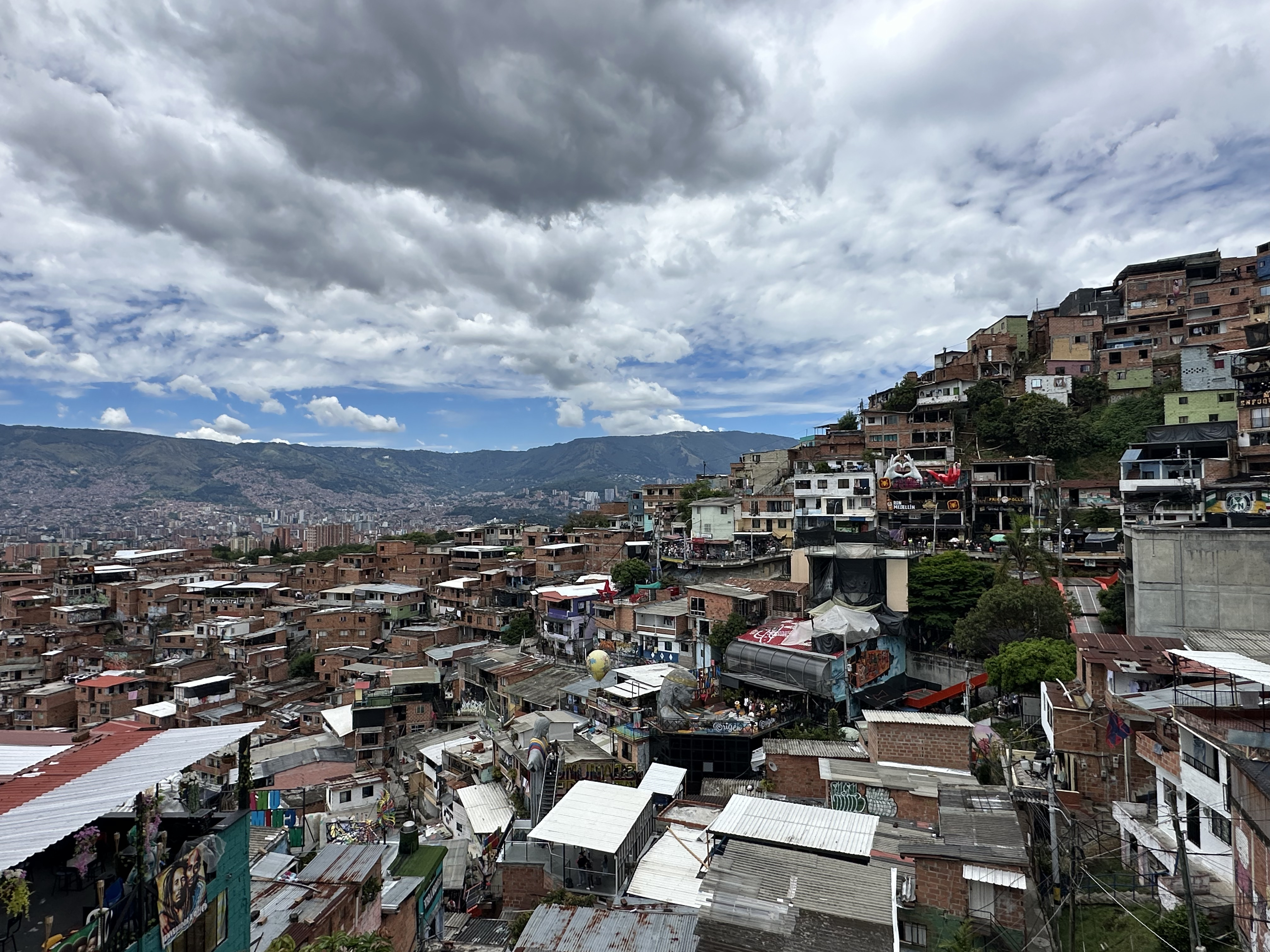
Start here. You are reading this from a café in Medellín, a coworking in Florianópolis, a coliving in Cusco, an Airbnb in Buenos Aires, a rooftop in Lima. Maybe Lisbon or Mexico City, but the profile is the same. You pay rent in dollars or euros in a city where rent is not paid in dollars or euros. You have a laptop, a visa that expires in 179 days, a return ticket you will not use, and a group chat where eight people know roughly which country you are in this week.
If you are that person, and if you are reading The Daily Nomad you probably are, then what follows is addressed to you specifically. It is not a travel advisory. It is not a panic piece. It is a note from the publication to the community it serves, about something the community is half-aware of and not yet naming clearly.
Foreigners are disappearing in South America at a rate that the English-language nomad press has not caught up to. Some of them are us. More of them, lately, are us.
The four people you could have been
The volunteer. Alessandro Coatti was 42. Italian. A molecular biologist who had worked at the Royal Society of Biology in London. He had saved up, quit the corporate-science track, and come to South America to volunteer with wildlife organizations while thinking about his next chapter. On April 3, 2025, he arrived in Santa Marta, Colombia. He checked into a hostel in the Centro Histórico. Three days later he told someone at the hostel he was heading to Minca, in the Sierra Nevada, to look at the birds. He also opened Grindr. He matched with a profile. He went to meet them. Two days after that, parts of his body were found in a suitcase beside the road leading to the Sierra Nevada football stadium. They identified him by the wristband from the hostel. Eight people are now in custody. The criminal organization that killed him was already in position when he arrived, they had been doing this. The Italian government followed the case at the diplomatic level. Coatti's cousin, interviewed by an Italian TV channel, said the family hopes there is justice. There probably will not be, not in the way a European family understands the word.
If you are a researcher, a volunteer, a mid-career person who took a sabbatical and came south to recalibrate, Coatti is you, statistically. The profile that made him appealing to the organization that killed him is the profile that made him appealing to the listings on Workaway and GoVoluntouring. Curious, solvent, alone, not fluent in the local dynamics, visible on dating apps in cities where those apps are both infrastructure and hunting ground.
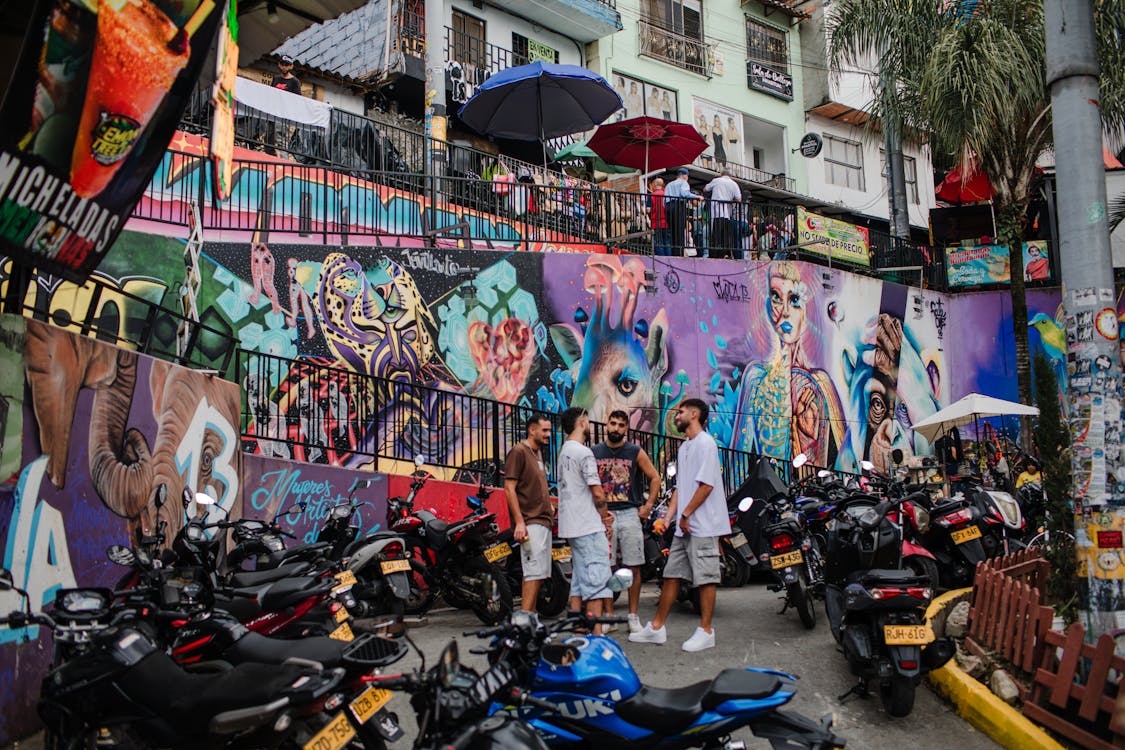
The party guy. In Medellín, a British traveler who appears in reporting only as James went to a party in El Poblado on November 15, 2025. His last known location that night was near the Club Campestre. He stopped answering his phone. By the time friends found him twenty-four hours later in a clinic called Las Américas, someone had withdrawn 73 million Colombian pesos, about 15,000 pounds, from his bank account. He had no phone, no wallet, no Spanish, and no memory of what had happened. He survived. The same month, an American posted in a Medellín expat Facebook group that his brother had not come home the night before his return flight. The brother was found hours later in a hotel he did not remember booking. "They drugged him and they robbed him. Someone got him into a hotel, and then he called me."
Between January and March of 2026, Medellín police registered 157 scopolamine-related robberies. The US Embassy, in an advisory that has now been standing for more than two years, warned in January 2024 of eight suspicious deaths of American citizens in the city in a single two-month window. The French head of the Medellín International Exchange Organization, Theo Mallerin, told El Espectador this April: "Ninety percent of the cases I've seen involve dating apps." In January 2026, Colombian police dismantled an organization that had stolen approximately 200 million pesos from a single Australian victim the previous year. The leaders of one cell were a mother and her daughter.
If you have used a dating app in Medellín, or gone out with a group you just met, or accepted a drink in Parque Lleras, James is you. He is almost certainly a version of someone you have shared a cowork with.
The quiet tourist. In September 2025, a 54-year-old Argentine named Alejandro Ainsworth was found dead in Copacabana four days after he stopped answering his phone. The autopsy found no signs of violence. No struggle, no wounds. The hypothesis police are still working is Boa Noite Cinderela, "Good Night, Cinderella", the Brazilian street name for a drug slipped into a drink that leaves the victim fully submissive. The method is old, the demographic is new: solo-traveling men in their 40s and 50s, credit cards active, staying in rented apartments or hotels, going out alone, meeting people online or in bars. Brazil's official missing-persons baseline is roughly 80,000 unknown whereabouts. Ainsworth's case was a blip against that number. Most cases like his are never catalogued as homicides at all.
If you travel alone and you drink in places where you don't know anyone yet, you are this demographic. The thing that makes Ainsworth statistically invisible is the thing that should be most disturbing about his death: there was no crime scene. There is no list you can get off of. The system that killed him is designed to leave no trace.
The backpacker who walked into the mountain. Natacha de Crombrugghe, a 28-year-old Belgian tourist, disappeared in Peru's Colca Valley in January 2022. She had checked into a hostel in Cabanaconde and never came back from a hike. Blood-stained clothing and blankets were eventually found near the hostel. Her case has never been resolved. Alberto Fedele, an Italian tourist, disappeared in Cusco in the same year. Carla Valpeoz, an American with a visual impairment, was last seen on security cameras near the Pisac ruins in December 2018; Peruvian police were still excavating possible burial sites in 2022 looking for her remains. She has never been found. Between January and July of 2025, Peruvian police registered 12,374 missing-person reports, an average of 51 per day. Cusco alone had 801 cases; Arequipa, 723. Peru is not at war and is not especially violent by regional standards. It simply has a search-and-rescue and investigative infrastructure that cannot keep up with its own missing-persons queue.
If you go into the mountains alone, or to the Amazon, or the Andes, you are this demographic. The Lonely Planet of fifteen years ago assumed that anywhere a gringo could reach by local bus was a place where the gringo would be found if lost. That assumption is no longer reliable. The infrastructure that was supposed to look for you is already looking for 12,000 other people.
What actually changed
None of us were the first foreigner to go to South America. Mochileros, hippies, writers, retirees, researchers, NGO workers, they went for decades. Most of them were fine. What changed, between roughly 2018 and now, is not that South America became dangerous. It is that three specific things reorganized around our arrival.
One. We came with serious money. A foreigner paying rent in dollars in Medellín today is, in local economic terms, a very different target than a backpacker in 2010 with three hundred dollars for the month. The Australian in Medellín lost 200 million pesos in a single night. The Brit lost 15,000 pounds. Coatti had the socioeconomic profile of someone worth killing for, even though what was stolen from him was, in Italian terms, a few thousand euros. Our presence reshaped the arithmetic of crime against foreigners. We did not mean to, but we did.
Two. The cocaine map reorganized. Colombia still produces, Peru still produces, but the export routes from the Pacific and the Atlantic have expanded and the cities that are now cocaine logistics hubs, Medellín, Guayaquil, Santos, are cities where foreigners also live. Where narco money concentrates, contracted violence concentrates. None of the four people in the section above were killed by cartels. But they were killed in cities whose baseline level of violence has been shaped by cartel money in ways that the city's tourism boards do not mention.
Three. Dating apps became infrastructure. When the expat community in 2015 used Tinder in Medellín, they were early adopters in a city where most people still met at bars. In 2026, dating apps are how everybody meets everybody. The criminal structure that killed Alessandro Coatti did not target a niche population, it targeted the general app-using population and refined over years until it had a playbook. The playbook works because the apps are everywhere and the foreigner using them at 11pm on a Tuesday is doing something that, in his city back home, would be unremarkable. What is different is not the user. What is different is the platform's new position in the local economy of violence.
The quiet worry in every expat group chat
Here is the part we don't usually say out loud.
If you are in a WhatsApp group of foreigners in Medellín, Florianópolis, Lima, Cusco, or Mexico City right now, there is already a message in the history where someone said "has anyone heard from [first name]?" There is also, probably, a reply chain where a few people confirmed he or she was fine, followed by nobody returning to close the loop. Those chains are how this community monitors itself. They are also how this community has begun to notice a problem that none of the traditional information channels, embassies, local press in English, LinkedIn, Instagram, are describing with the clarity that the chains describe it.
The concern is not hypothetical. It is operational. It is the reason people in the Medellín expat community started, informally, sharing live location with two or three people before any first date arranged through an app. It is the reason the Facebook group Expat Medellín has ongoing threads with titles like "Safety check-in: please reply here once a day." It is the reason a nomad who would not have thought twice about a solo weekend in Rio five years ago is now, quietly, looping in one friend before leaving the apartment.
This is not paranoia. The word for what is happening is adjustment. A demographic that moved south on a promise of maximum personal freedom is noticing that the promise shipped without one of the quiet features that had been bundled with it in the home country, the assumption that if something happened to you, somebody was already looking. In your home city you had a mother, a sister, a landlord, a coworker, a regular bartender, a gym. In Medellín on month three, you have a coworking and eight people in a group chat who are all on different time zones.
The location you share with them is a string of coordinates. What it replaces is a social fabric. It is not the same thing.
Nobody is going to tell the demographic to go home. Most of us are not going home. What the demographic needs to do is to notice that the thing it has been calling freedom has, in some cities, a cost that the cities don't advertise and the platforms don't price in. The cost shows up as an Italian biologist in a suitcase. It shows up as a British trader in a clinic with no phone. It shows up as an Argentine on a Copacabana sidewalk with no wounds and no witnesses. It shows up as a Belgian woman who never came back from a hike.
If you recognized yourself in any of the four portraits above, you are not paranoid. You are the demographic.
What the community is already doing
This is not prescription. It is observation. What follows is what foreigners in the affected cities have, in the last twelve months, started doing on their own, not because any publication told them to, but because they noticed.
In Medellín, a loose practice has emerged of sending a screenshot of the Tinder/Bumble/Grindr profile, face, first name, bio, to one friend before leaving the apartment for a first date. The friend is not expected to vet. The friend is expected to still have the screenshot if the person does not come back by morning.
In Florianópolis and Lisbon (the Portuguese-speaking circuit has been faster on this), coliving houses are running informal check-in boards. You write where you are going on a whiteboard and approximately when you expect to be back. It sounds like a hostel practice from 2004. It is a hostel practice from 2004. It has come back.
In Mexico City, Buenos Aires, and increasingly Lima, small WhatsApp groups of three or four trusted people now share live location semi-permanently. Not for emergencies. For ambient awareness. When one person goes offline for eight hours in a neighborhood the others do not recognize, somebody checks.
Across the circuit, the Embassy registration programs (STEP for Americans, the equivalent for Canadians, Italians, Germans, and Brits) have seen a notable increase in sign-ups over the last year. These programs don't protect you. What they do is make sure that if something happens to you, your embassy knows you existed in the country and can move faster.
None of these is a solution. A solution would require the host cities, the platforms, and the consulates to coordinate in ways none of them are going to coordinate. These are small defensive adaptations that individual communities of foreigners have built because the statistical curve told them to. They are the least this community can do. They are also, right now, more than most of us are doing.
Who knows where you are right now
The generation that built The Daily Nomad's readership did not come south to be told to be careful. That is not the tone of this piece and the publication is not going to adopt it. What the piece is saying is narrower and harder: the arrangement we have been calling remote-work freedom is carrying a silent tax in specific cities of this continent, and the people paying the tax are, increasingly, us.
Alessandro Coatti was not careless. He was a molecular biologist. He had an itinerary. He had an emergency contact. He shared his location. None of it saved him because the organization that was going to kill him was already waiting on the platform he opened.
So here is the question this publication is going to leave sitting on your screen. Not as a moral. As a question.
Right now, reading this, in your café in El Poblado, your coworking in Barra, your Airbnb in Barranco, your rooftop in Palermo, who knows where you are? Not roughly. Exactly. And if you go silent for the next eighteen hours, which of them is going to notice first, and what are they going to do?
If the answer is nobody or I don't know, that is the actionable part. Not the statistic. Not the case. That.
The last ping goes out, and then the phone goes dark. The person on the other side of the conversation, wherever in the world they are, opens the location app one more time. The blue dot stays where it stayed.
This is the part of the job we are not going to pretend is not happening. The Daily Nomad will keep covering what it is like to live and work across this continent, the new cafés, the new visas, the new coworkings. Part of that, honestly, is this.
The Daily Nomad, Dispatches from the places where the news is still being written., Sources: El Espectador, El Tiempo (Colombia), El Colombiano, Infobae Colombia, Infobae América, Caracol Séptimo Día, La Nación (Argentina), Infobae Argentina, Cadena 3, La República (Perú), Diario El Sol del Cusco, active US Embassy advisories for Colombia, Royal Society of Biology (UK), Fiscalía General de la Nación (Colombia), PNP Perú (Reniped), Mães da Sé (Brazil).