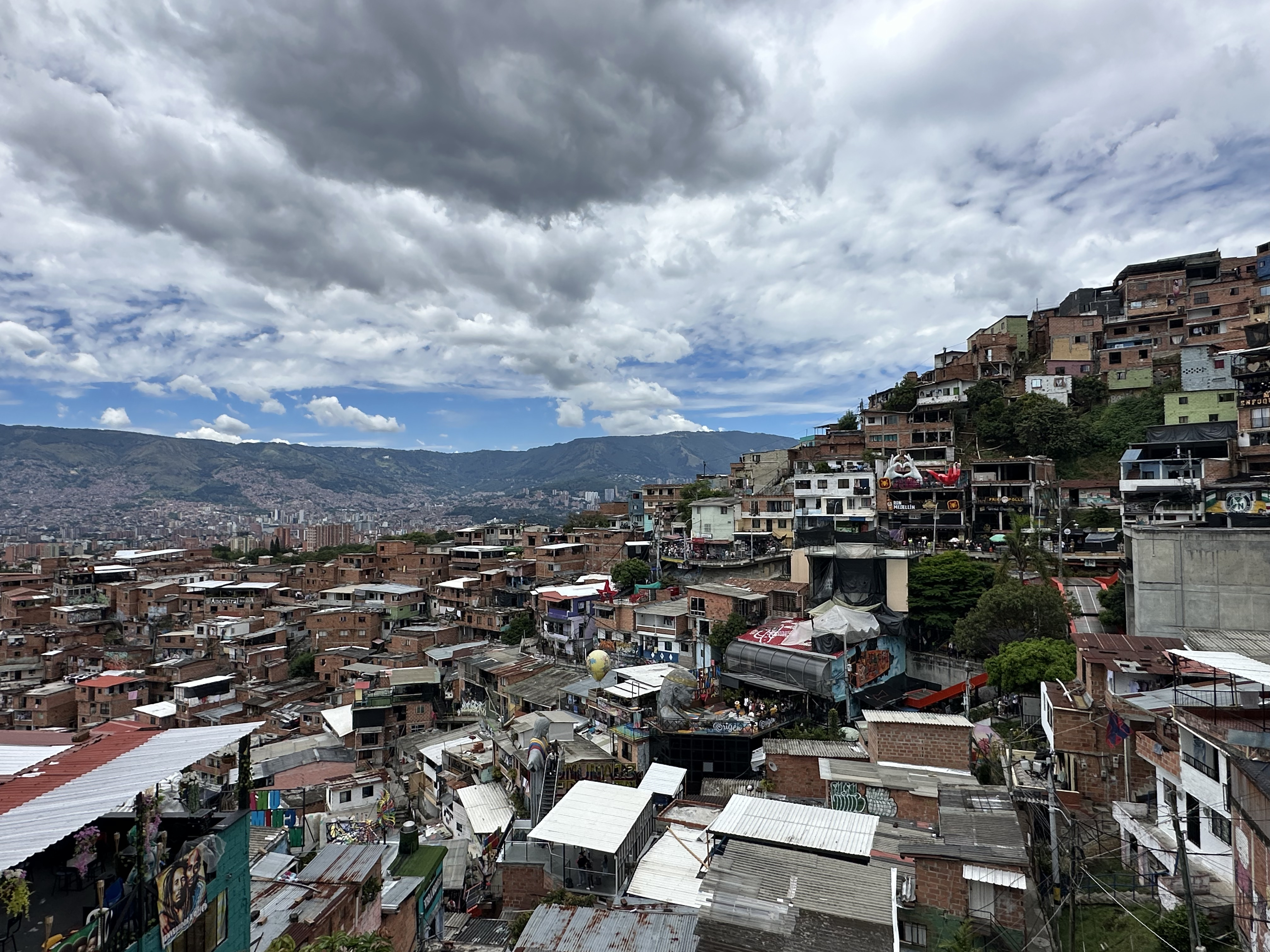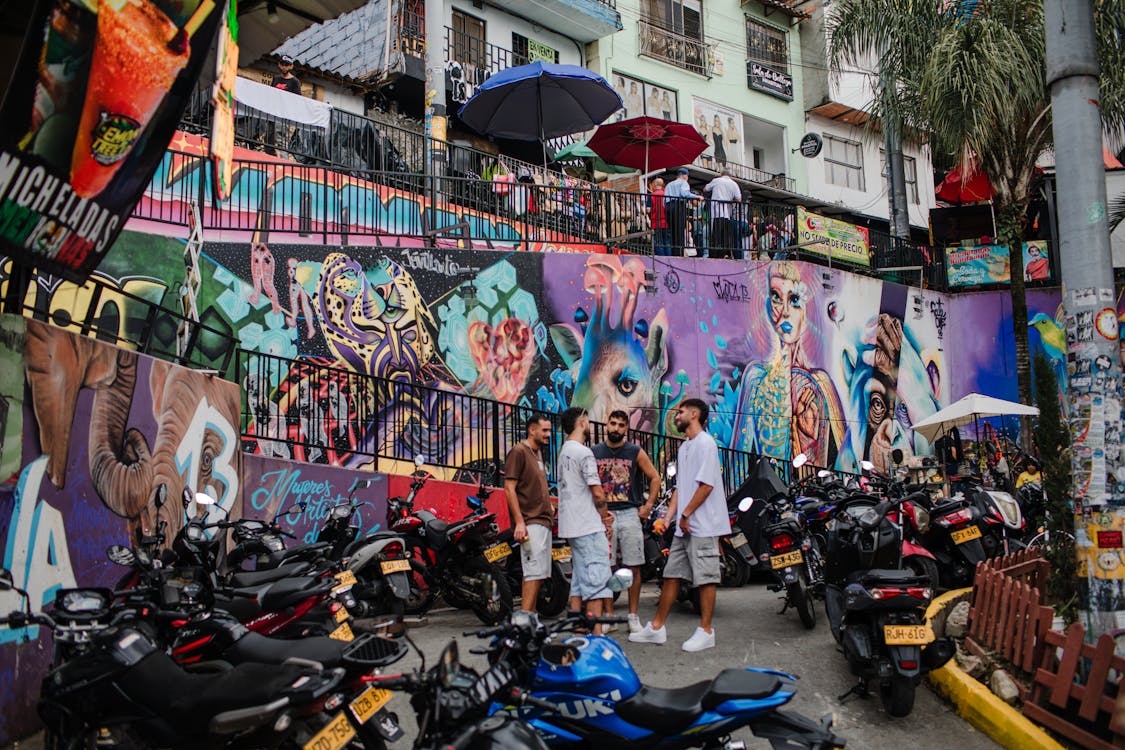
There's a number going around that you should know about. Seven hundred and fifty dollars a month. That's what Colombia is asking you to prove, in income, to let you stay legally for two years and work remotely from a balcony in Medellín. Brazil wants fifteen hundred. Spain wants over three thousand. Portugal, around the same. The most affordable options include Colombia at seven hundred and fifty dollars a month and Brazil at fifteen hundred, while European digital nomad visas typically require between twenty-seven hundred and forty-four hundred dollars a month.
Read that again. *Europe wants four times what Colombia wants. *And Europe gives you cold rain, a landlord who hates you, and a tax office that will find you eventually. Colombia gives you mountains, a woman selling mango on the corner who calls you mi amor without meaning it, and a bandwidth that mostly works.
I'm not selling you Colombia. The country has its own ghosts and most of them still walk around at night. But the math is the math, and the math right now is shouting.
The thing nobody tells you about the digital nomad visa boom is that it isn't really about you. It's about countries figuring out that the gringo with a laptop is a quieter, better-behaved tourist than the gringo with a beer bong. He pays rent for six months instead of three nights. He learns enough Spanish to order coffee. He doesn't break the toilet. So governments built him a visa.
In 2026, digital nomad visas have become a structural feature of the global economy, with more than sixty jurisdictions across Europe, the Caribbean, Latin America and parts of Asia having introduced formal digital nomad visa schemes. Sixty countries. Sixty doors. And most people still aren't walking through any of them because they don't know the doors exist, or they think the paperwork is going to eat their soul.
The paperwork might eat your soul a little. But not as much as paying twenty-six hundred dollars a month for a studio in Lisbon next to a guy who plays the bongos at midnight.
What Latin America is actually offering in 2026
I'll keep this clean because the romance is in the streets, not in the spreadsheet. There are currently nine digital nomad visas from Mexico down to Argentina: Argentina, Belize, Brazil, Colombia, Costa Rica, Ecuador, Mexico, Panama, and Uruguay. A Way Abroad Colombia. Seven hundred and fifty bucks a month. Two-year visa. Colombia's Digital Nomad Visa, called Type V, is specifically for remote workers, freelancers, and digital entrepreneurs who earn income from clients or employers outside Colombia. Medellín is the hype. Bogotá is for grown-ups. Cartagena is for people who want to sweat through their shirts and pretend it's romantic.
Brazil. Fifteen hundred dollars a month. The Lula government's most visible recent change is the April 2025 eVisa requirement for US, Canadian, and Australian travelers, and Decree 12,657 from October 2025 introduced Brazil's first comprehensive National Migration Policy. Translation: they're tightening, but the door is still open. Florianópolis is the new hipster move. Rio is Rio.
Mexico. No formal nomad visa, but the temporary residency works the same way for anyone who can prove income. Mexico already offers 180 day tourist visas, with border runs for usually easy renewal for many nationalities, but the temporary residency visa is perfect if you prefer to do things legally. The border runs are getting harder. Officers have started saying no to people they used to wave through. The legal route isn't a luxury anymore. It's becoming the only route.
Argentina. A hundred and eighty days, renewable. The economy is a knife fight, which is exactly why earning dollars and spending pesos is somebody's idea of paradise.
Ecuador. Around fourteen hundred a month. Quiet, cheap, the country nobody mentions, which is exactly why some of the smartest people I know live there.
Panama, Costa Rica, Belize, Uruguay. Each one a flavor. Panama wants a lawyer. Costa Rica wants you to like surfing. Uruguay wants you to be quiet and have money. Belize wants you to like Belize, which is mostly about being okay with not much happening.
What they don't put in the brochure
Here's the part where the romance dies a little.
A nomad visa does not mean you don't pay taxes. Across virtually all digital nomad visa programs, "digital nomad visa" does not automatically mean "tax-free." Many countries classify you as a tax resident once you exceed a stay threshold, often 183 days in a calendar year, and becoming a tax resident can make you liable for local income tax on worldwide earnings. Visafreenomads A hundred and eighty-three days. Stay one day past that line and the country wants a piece of you. Worldwide income, in some cases. The kind of thing that ruins a Tuesday three years from now when you forgot you were ever there.
The territorial-tax countries: Panama, Costa Rica, Uruguay in some configurations are kinder. They only tax what you earn locally. If your money comes from a Stripe account in Delaware or a Wise transfer from a Spanish client, it stays yours.
Colombia will tax you on worldwide income after a hundred and eighty-three days of residency. Read that twice. Then call an accountant who actually knows the country, not the guy on YouTube with the affiliate link.
The income trap
The minimums are climbing.
Income thresholds in 2026 are generally higher than those introduced in the early stages of these programes, and caps on application volumes are being considered in certain markets. Spain went up. Portugal goes up automatically with the minimum wage. Even Mexico, which has no official nomad number, expects more income on the ground than it did three years ago because rent in Mexico City is now what rent in Berlin used to be.
The window is closing. Not slamming. Closing. Slow, like an old elevator door. The gringo with seven hundred and fifty dollars a month who could have moved to Medellín in 2024 with no questions asked may, in 2027, have to prove twelve hundred. That's how this story always ends. Country opens door. Word gets out. Door narrows.
So what do you do?
You don't pack tomorrow. You don't sell the apartment in Brooklyn next week and buy a hammock. You pick three countries. You read the fine print. You hire one immigration lawyer in each, they cost between five hundred and two thousand dollars, and they save you nine months of your life. You ask them about taxes specifically, because the visa lawyer and the tax lawyer are usually not the same person. You make sure your remote income is documented in a way that consulates can read: contracts, bank statements, invoices, the boring paper trail.
And then you go
You go because the other option is paying four thousand dollars a month for a Brooklyn one-bedroom while a guy in Medellín pays seven hundred for a place with a balcony and a view of Pablo's old neighborhood, and he laughs at you on Instagram while drinking coffee that costs forty cents.
Seven hundred and fifty dollars. Two years legal. The number is on the wall. Whether you read it or not is up to you. I'm pouring another. The world is bigger than your zip code, and somebody figured out how to legalize the leaving. Cheers.