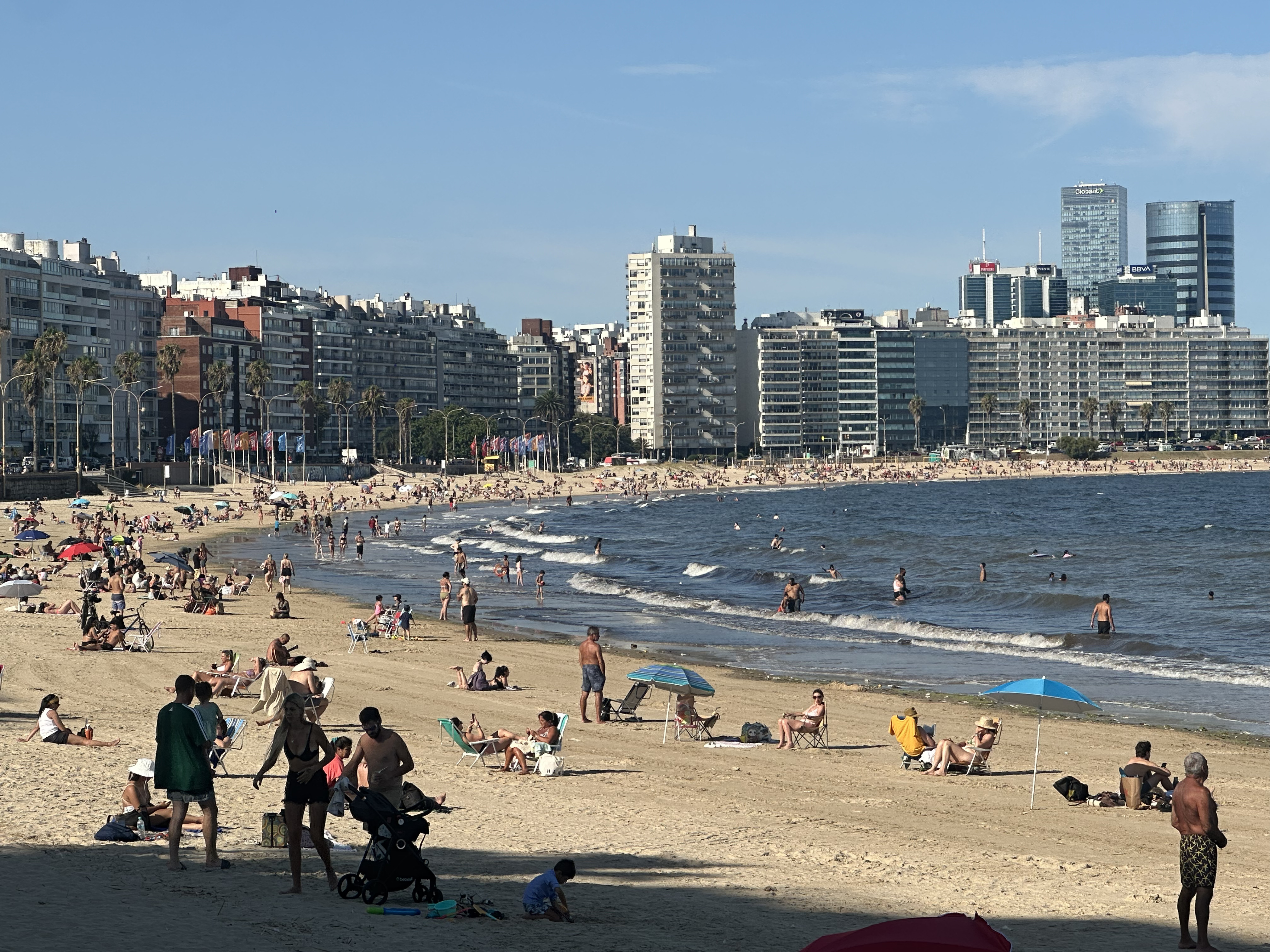
Walk the rambla of Montevideo on a sunday afternoon in autumn and the city looks almost unreasonably pleasant. Couples share mate, older men fish off the rocks, young women jog in matching black leggings, the river that looks like a sea stretches to the horizon. It is beautiful. It is calm. It is, by almost every metric, one of the most livable cities in the americas.
It is also the city with the highest reported rates of clinical depression in the region, and has been for some years. That contradiction is worth sitting with.
The Numbers, and Their Limits
The uruguayan ministry of health and several recent latin american health observatories place Uruguay consistently near the top of the regional rankings for depression prevalence. Montevideo, which holds a majority of the country's population, is the main driver. Some studies put the lifetime prevalence of depression in uruguayan adults at close to eighteen percent, which is higher than argentina, brazil, chile, and peru.
The caveat, of course, is that these numbers partly reflect how good uruguay is at counting. Uruguay has a mature public health system, a relatively high willingness to discuss mental health, and a cultural openness that allows people to name what they feel. Countries that do not count as well report less depression. That is a measurement issue, not a happiness issue.
But even accounting for that, uruguayans are not the cheeriest people on the continent. Ask one.
The Cultural Theories
Several explanations circulate. The first is demographic. Uruguay is one of the oldest countries in the region, with a median age higher than most of its neighbors. Aging populations report more depression almost everywhere. The second is historical. The generation that lived through the military dictatorship of the seventies and early eighties carries a weight that every montevideano knows about, even if nobody in the family has talked about it. The third is climatic. The winters are longer and greyer than most tourists realize, and seasonal depressive patterns are real.
The fourth theory, which is the most interesting and the most contested, is what locals sometimes call the stillness theory. Uruguay is a small, stable, relatively equal, low drama country. Things happen slowly here. For some people that is peace. For other people it is the absence of the kind of chaos and hope that keeps you interested in the next morning.
What the City Does About It
Montevideo is not ignoring the problem. The city funds free mental health consultations, the national health system includes therapy coverage, and every neighborhood has community based support options. The fight is real, and it is being fought. But the cultural piece is the hardest. You cannot prescribe your way out of the feeling that the sky is grey.
If you visit Montevideo, visit it with this in mind. The city is not sad because it is broken. It is sad because it is old and smart and honest, and it has decided not to pretend otherwise. That is its own kind of beauty. It is not a beauty every traveler notices.