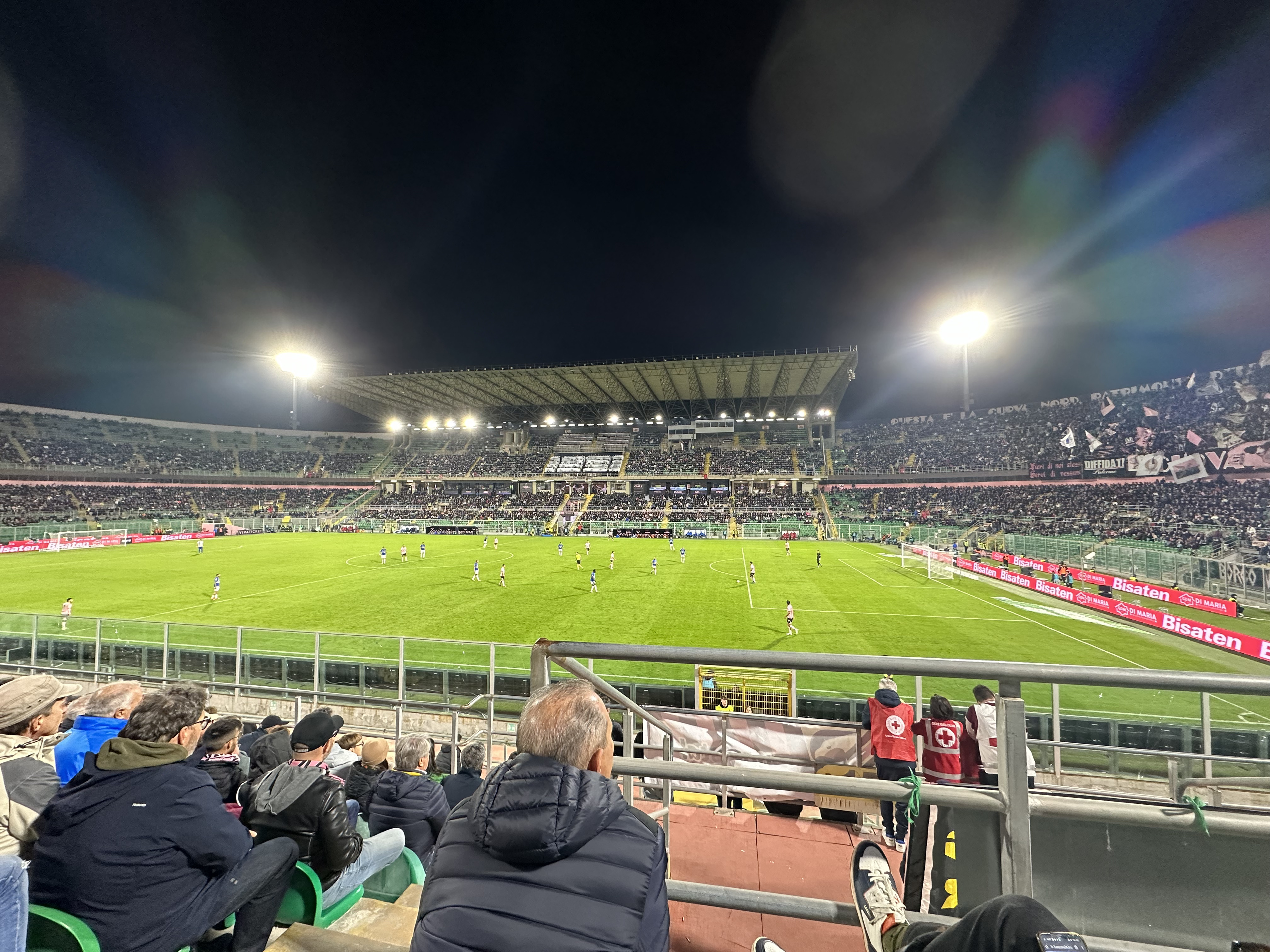
There is a stadium in Sicily called Renzo Barbera. It sits in the Favorita park, under the slope of Monte Pellegrino, with the Mediterranean on one side and the wild green of the mountain on the other. If you arrive an hour before kickoff you can hear it before you see it. The drums start outside the gates. The pink-and-black scarves come up. The smoke pours off the curva. And then, at some point, the place explodes.
I have stood on a lot of terraces in my life. I have heard the Kop sing. I have seen the Yellow Wall in Dortmund and the Boca Bombonera bounce. The Barbera, on a night when Palermo are climbing, is one of the great sound theatres in European football. Sicilians do not whisper.
This week, the Barbera is back at the centre of one of the more romantic stories in Italian football. On May 17, Palermo travel north for the first leg of the Serie B promotion play-off semi-final. On May 20 they return home for the second leg. If they win, they play a two-legged final on May 24 and May 29. If they win that, they are back in Serie A for the first time since 2017.
It has been nine years.
If you do not follow Italian football, you should understand what nine years means in this context. Palermo are a club with twenty-nine seasons in Serie A behind them, with appearances in Europe, with a generation of fans who remember Javier Pastore and Edinson Cavani and Paulo Dybala wearing pink in front of seventy thousand people. This is not a small club rising. This is a big club coming back.