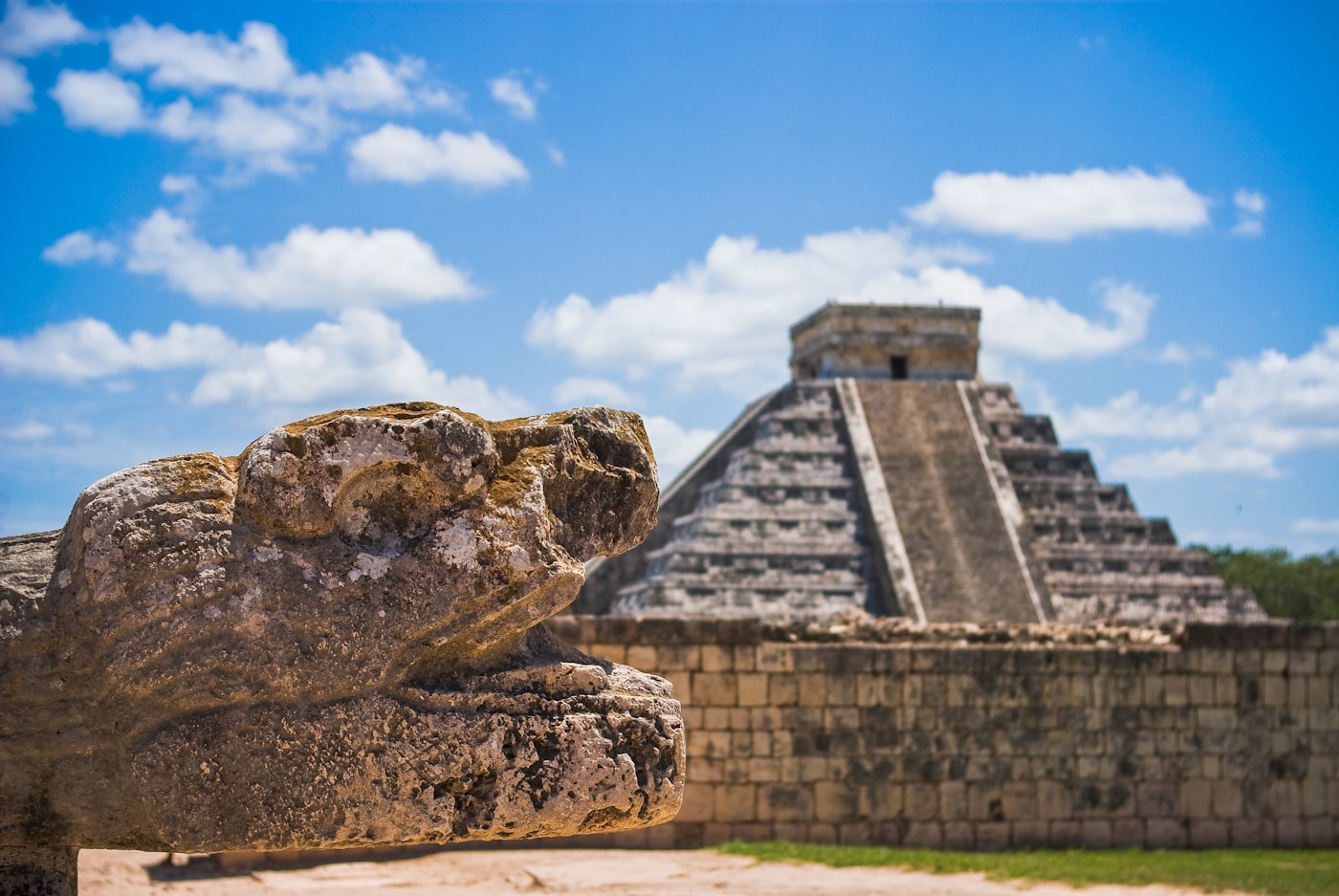
The pyramid of Ichkabal is taller than most of the ones at Chichen Itza, older than many of them, and was completely unknown to the outside world until the early 1990s. It sits in the southern jungle of Quintana Roo, about three hours by dirt road from the nearest proper town, and until very recently, the only way to see it was to be a mexican archaeologist with permission, a machete, and a lot of patience.
In mid 2024, the mexican government opened Ichkabal to the public for the first time. Since then, the site has been reshaping the conversation about the classic maya in ways nobody in 1990 could have predicted.
What Ichkabal Actually Is
Ichkabal is not a small site. The main pyramid is around forty six meters tall, which is taller than El Castillo in Chichen Itza. The complex extends across several square kilometers of jungle, with multiple plazas, ball courts, residential zones, and a water management system that suggests a population of tens of thousands at the peak. The construction dates predominantly to the late pre classic, which means the city was already monumental around two thousand years ago, before many of the famous maya cities had their first stones laid.
In simple terms, Ichkabal is one of the oldest, largest maya cities that most people have never heard of. And it is in the middle of a jungle that most of its mayan contemporaries cleared to build in.
Why It Matters
For decades, the story of the maya civilization was told as a gradual rise from small villages in the pre classic to monumental cities in the classic period. Sites like Ichkabal, and others currently being surveyed with LIDAR in the same region, are forcing archaeologists to revise that timeline. The maya were building monumental cities much earlier than previously believed, and the pre classic period, once considered a kind of warm up, is turning out to have been a golden age in its own right.
This is the kind of discovery that does not happen often. An entire period of a civilization is getting upgraded in real time.
Visiting Ichkabal in 2026
The site is open but not polished. You drive in on a road that is still dirt for the last stretch. The visitor infrastructure is minimal. There are no crowds. The climb up the main pyramid is on wooden stairs built against the ancient stone, and the view from the top is an uninterrupted green canopy that goes to the horizon in every direction.
For a traveler who has already seen the famous maya sites and wants to see one that still feels like a discovery, Ichkabal is the trip to take this year. In five years it will be different. Right now, the jungle is still the loudest thing around it, and you can hear the first archaeologists discovering something new in the distance, carefully, every afternoon.