The first cholita I met in La Paz was waiting for a taxi at the corner of Calle Illampu, bowler hat at the exact angle her grandmother would have approved of, two thick braids reaching past her waist, a smartphone in one hand and a market bag in the other. She was on her way to her daughter's graduation, she said. Her daughter was about to finish law school.
Everything about that sentence would have been unthinkable in the La Paz of the 1990s, which was the La Paz that treated the pollera as a mark of the backward countryside and the indigenous body as something to leave behind. What happened in the years between then and now is one of the quieter cultural reversals anywhere in the Americas.
From Invisibility to Iconography
The cholita, the aymara and quechua woman in the voluminous skirt and the english bowler hat that somehow ended up as the national emblem of a bolivian identity, was never invented by anyone in particular. The outfit is a layered accident of colonial taste and indigenous survival. What changed is how it is worn. The new generation of cholitas does not wear the pollera because they have to. They wear it because it is theirs and because they decided it looks good.
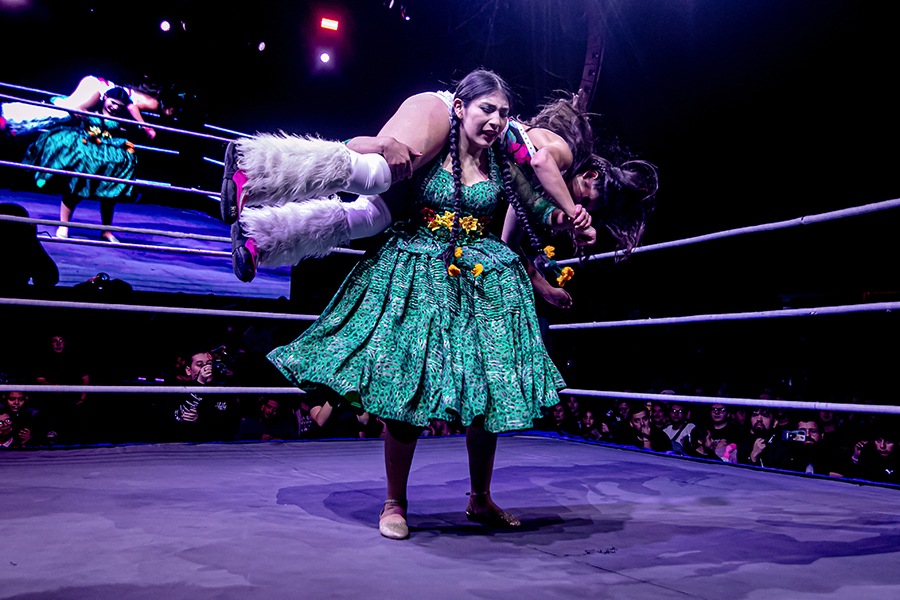
You see them on runways in Milan now. You see them on murals in the touristy parts of the city. You see them fighting in the ring at the Cholitas Luchadoras shows in El Alto, where grandmothers in full traditional dress execute flying kicks on opponents half their age. It is a spectacle, but it is also a thesis.
What the Outside World Gets Wrong
Visitors come to La Paz expecting the cholitas to be a kind of living museum. What they find instead is a political and economic force. Cholitas run some of the most profitable market stalls in the city. They broker wholesale deals for imported Chinese electronics. They finance the education of their children through informal savings pools. The older ones remember when a restaurant in the zona sur would refuse to seat them. The younger ones eat wherever they want.
None of this is sentimentality. It is a quiet, ongoing victory, built pollera by pollera, decade after decade.
Why La Paz Feels Like Itself
Every city that still feels like itself has a few anchor figures who refuse to dissolve into the global average. In La Paz, that figure is the cholita. As long as she is on the corner, on the runway, in the ring, and in the law office, the city still belongs to the altiplano and not to anybody else.